Course Details
This advanced workshop is designed for practitioners who are already performing interventional pain management procedures presently and/or have completed the 3-Day Pain Management Training of Empire Medical Training. Attendees upon successful completion of the program will attain a level of proficiency allowing them to perform the various procedures on patients as well as the ability to pursue additional certification pathways and accreditation.
Back and neck pain consistently rank in the top five disabling disorders in the United States and the cost to the overall healthcare system is significant. It is estimated that among adults, 60% to 80% will experience back pain and 20% to 70% will experience neck pain that interferes with their daily activities during their lifetimes either as sub-acute or chronically. The prevalence of Spondylosis and other cervical spine disorders in our aging population and in women will compliment your present interventional pain procedures offered. For example, in many cases non-interventional treatments are not effective in controlling upper spine and neck pain and epidurals, nerve block innervation, and facet injections is the best options for patients.
Interventional Pain Procedures for Neck and Back Pain
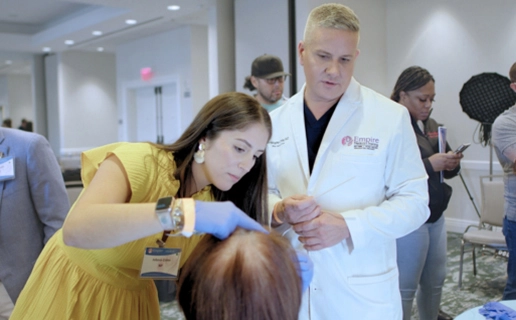
Cervical Epidurals, Cervical Facet Joint Injections, and spinal nerve block procedures are discussed and reviewed including indications for, contraindications, and expectations concerning the procedure. All protocols, techniques, and approaches are discussed and each attendee will need to become proficient in these procedures during the “hands-on” cadaver program in the afternoon practical sessions.
Intralaminar Epidurals are utilized to reduce and manage pain in Lumbosacral disk herniation. Spinal stenosis with radicular pain (central canal stenosis, foraminal and lateral recess stenosis) Compression fracture of the lumbar spine with radicular pain. Facet or nerve root cyst with radicular pain. Cervical facet joint injections will also be taught and discussed in detail as to the need for, pathologies related to, and the safe administration of these injections. However, cervical facet joint injections are not as common as the epidurals but are needed depending upon the conditions presented by your patient.
Non-surgical options for the management of the pain associated with cervical spine (neck) are also in high demand with the use of epidurals and cervical facet joint injections. Epidural steroid injection is the most commonly performed injection of all the injections and are very common as a result of previously failed back surgeries. There are several methods used to perform an epidural steroid injection for patients to which each attendee will learn the intralaminar approach.
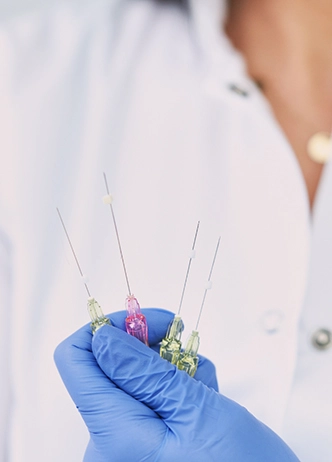
An intralaminar epidural injection is done by placing a needle between the bony vertebrae in the empty space that surrounds the spinal cord. In this approach, a steroid is injected directly around the dura, the sac around the nerve roots that contains cerebrospinal fluid. The intralaminar epidural procedure will include indications for treatment, detailed protocols, description and medical contraindications as well as hand-on cadaver training under image guidance.
FDA Neurotoxin Administration for Pain Management (Therapeutic Botulinum Toxin-A|B)
Included in the Advanced Pain Management course will be extensive didactic in the diagnosis of different medical pain conditions that would benefit from the administration of FDA Approved Neurotoxin Therapies for Chronic Migraine Headaches, Cervical Dystonia, and Hyperhidrosis of the axillae. The use of neurotoxins used “off-label” will be discussed and will include possible protocols or treatment pearls for different types of muscle spasticity and experimental uses of the prescription medication for certain neuropathies. Non-interventional treatments using neurotoxins for certain pain management conditions is becoming more acceptable due to the FDA Approvals and indications for treatment and your procedure training will include all protocols and necessary information to perform this procedure including the billing and coding.
There is no “hands-on” for the neurotoxin procedures but we will incorporate cadaver or model training as applicable in demonstrating the injection therapies and will include location, dosing, and type of injections used in addition to outcome expectations for the procedure.
Exosomes Treatment for Certain Sub-Acute and Chronic Pain Conditions
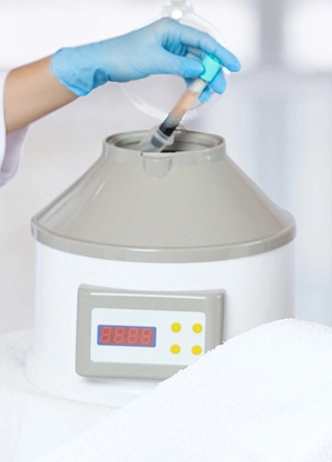
Exosomes are derived via tissue culture from a licensed tissue bank and is derived from amniotic tissue and has been used successfully for its anti-inflammatory and wound healing properties. The acellular suspension of exosomes contains large concentrations of cytokines, growth factors, and other signaling molecules in support to enable the transmission of proteins, lipids, and other genetic information that will modulate cellular expression within tissues for positive medical outcomes.
Exosome treatments are becoming very popular with Practitioners due to their convenience and increased efficacy over conventional therapies in treating spine and joint pain in a non-invasive manner that can be performed in an in-office setting. The exosomes training will discuss an array of pain indications that would benefit from this “cash basis” type of service as well as a review of evidence-based studies supporting this procedure. In addition to the training, attendees will receive all protocols, contraindications, dosing, and pertinent “standard of care” requirements in offering this new exciting procedure.
Supplemental intraarticular A2-macroglobulin (A2M) is also discussed as well as complete protocols, dosing, and indications for treatment including pre-testing for inflammation using FACT. The Fibronectin Aggrecan Complex Test (FACT™) is an enzyme linked immunosorbent assay (ELISA) that measures the presence of a Fibronectin-Aggrecan Complex (FAC) and other related biomarkers in a fluid specimen taken from patients with spine or joint related pain. FAC is a unique molecular complex that has been reported in peer-reviewed publications to be associated with painful inflammation and aids in diagnosis.
Review of RF Ablation Procedure and Other Conditions
Newer technologies in image guidance and the advancement in RF Ablative technologies now allow every physician to become proficient for this modality. The Advanced Pain Management Training Workshop will again review protocols using RF Ablative Technologies for interventional pain management procedures. In addition, there is demonstration on cadavers of the technologies for attendees to feel comfortable in the procedure as well as gain knowledge concerning acquisition of the device as well as billing and coding requirements for the procedure.
RF Ablation has replaced neurolysis for many private insurance carriers who will only reimburse for this type of service. RF Ablation is the new “gold standard” in the terms of standard of care for patients due to increased efficacy and less side effects or complications associated with the procedure.















 1-Year Term + 1 Extra Year FREE